
OTHER WAYS TO HELP:
VOLUNTEER, CORPORATE SPONSORSHIP, SCHOOL COLLABORATION
Volunteer:
To find out more, please call Sheila Luke on +44 (0)7766 257765 or email her on Sheila@projectsabroadfoundation.org.
Individuals and groups can volunteer at Akokoa for childcare or teaching. Medical outreach can also be arranged through Projects Abroad if you’re interested in nursing, public health or other aspects of medicine and healthcare. In the case of ICT, we have one volunteer who gives weekly classes online from Massachusetts, and there also other possibilities to help in this field.
Corporate Sponsorship:
To find out more, please call Peter Slowe on +44 (0)7767 703666 or email him on peterslowe@projects-abroad.co.uk.
Companies can arrange for their staff to volunteer (as above) and can combine volunteering with donations towards the particular areas where staff-members may be working, or they can make a general donation.
School Collaboration:
To find out more, please call Peter Slowe on +44 (0)7767 703666 or email him on peterslowe@projects-abroad.co.uk.
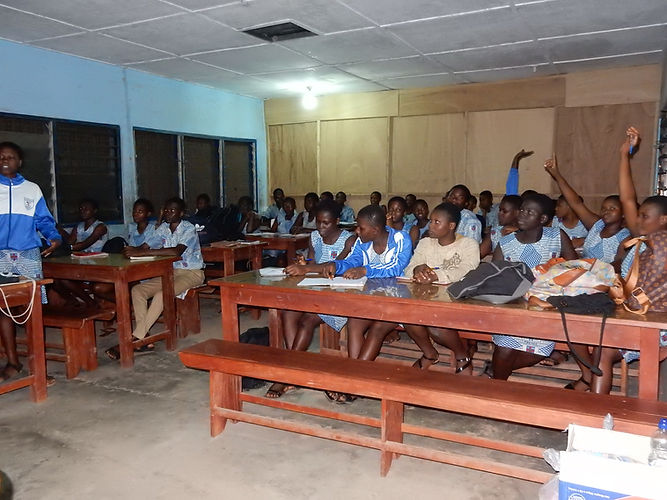
Schools can work directly with Tore Eikeland School in Akokoa. Here are some examples:
Cultural
At junior level, pupils should choose a picture or a piece of music which they like and then show it or play it in classes in both schools. Each side would give their opinion – like score out or 10, bits they like best, favourite colours, favourite instrument, and so on.
At senior level, senior students should select a piece of art or music to be sad, joyful, inspiring, depressing, and so on, and try it out on the younger children and watch their reactions.
Environmental
At junior level, pupils should choose a flower or a plant growing somewhere near their classroom, for example in the school grounds, and they should prepare descriptions of their choice and present it online to the others.
At senior level, they can select a wildlife programme for the younger children to watch and prepare simple questions to ask them about it. Perhaps they could also judge the younger children’s drawings of animals in the programme. Maybe, they can also ask specific questions about the rewilding area so the children are encouraged to explore it.
Climate
At junior level, they should record and chart the daily temperature and rainfall around both schools and make comparisons.
At senior level, they need to explain climate change. The concept of climate change doesn’t mean much in Ghana where the climate hasn’t changed that much. However, there is a lot of pollution from cars and trucks on the main road near Akokoa – so perhaps that can be linked to climate change and its consequences.
Nutrition
At junior level, they should say what they eat in each place and try out each other’s cooking. For example, chicken and corn are eaten in both places but prepared and cooked differently.
At senior level, the students can study the nutrition of what they eat each day in Akokoa. They can even advise on school meals, both the preparation and the nutritional value.
School visits
School in-person visits to Akokoa can also be arranged for teachers, school classes, or other school groups. This would normally be arranged through Projects Abroad, but enquiries should initially be made to Sheila Luke at our Foundation by calling her on +44 (0)7766 257765 or emailing her on Sheila@projectsabroadfoundation.org.